

the history
Six generations, one homestead, and the stories that shaped it.
1842
The Beginning of Marybank
A Scottish dream in South Australia.
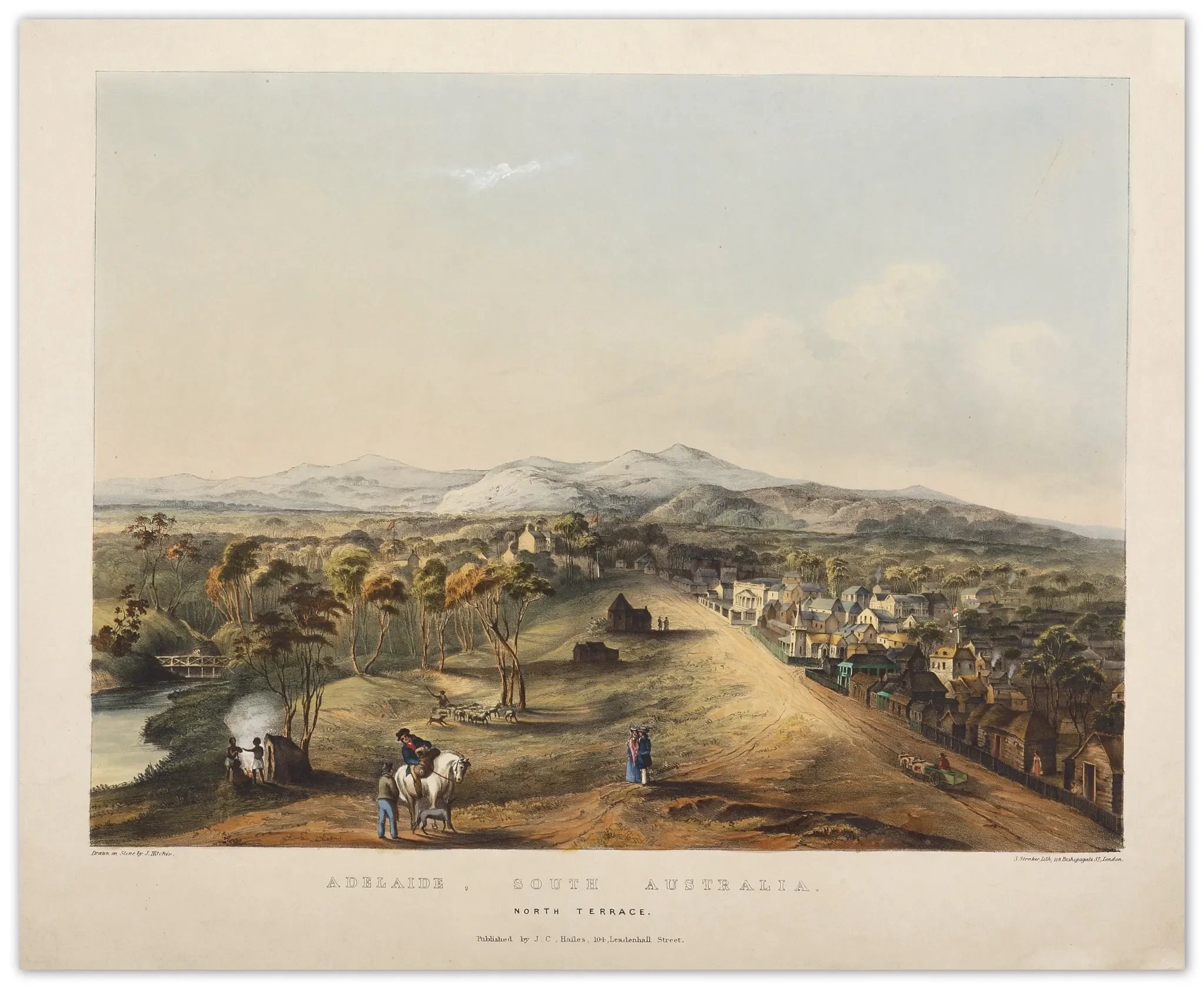
Marybank’s story began in 1842 when Scottish colonist Thomas Shepherd established the estate in the Adelaide foothills.
Thomas was a wealthy merchant, draper and businessman who arrived in South Australia in 1838. Along with his wife, Mary Murray, he created a substantial estate on approximately 560 acres of land near Black Hill.
The property was named Marybank after Mary, and the homestead was designed as an elegant Georgian residence reflecting the aspirations of early colonial South Australia.
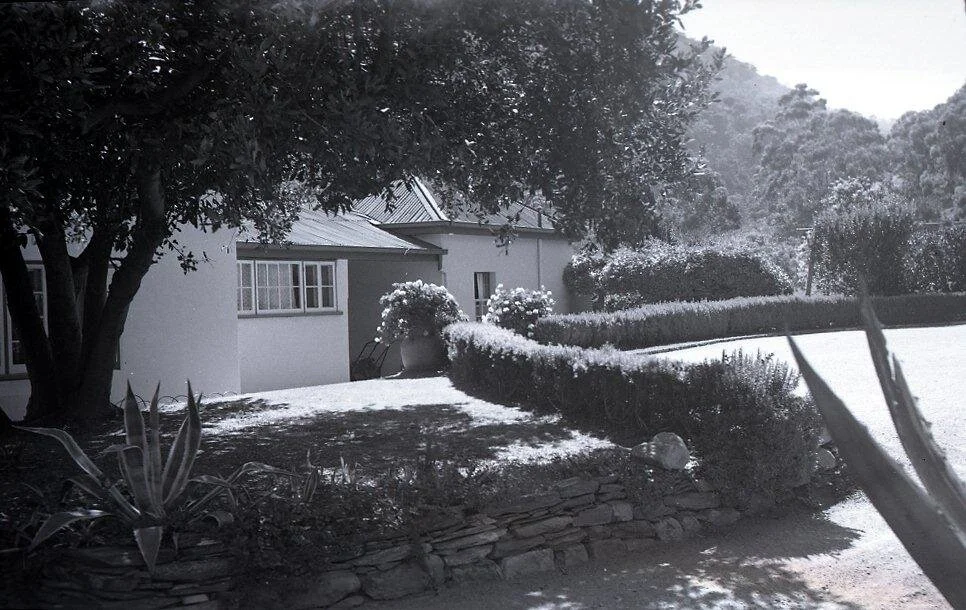
The original home featured a symmetrical design, elegant French windows, decorative fanlights, a surrounding verandah, cellar and detached kitchen — a reflection of both comfort and sophistication for the time. Beneath the later corrugated iron roof still remain the original hand-hewn red gum shingles from the 1840s.
Read more:
The Shepherd Family: The First Chapter of Marybank
8th Sept 1855
Death of Mrs. Shepherd.— Many of our readers will hear with regret that Mrs. Shepherd, the wife of our old and esteemed fellow-colonist Thomas Shepherd, Esq. after suffering severely from a malignant attack of smallpox, occurring shortly after her confine-ment, died at London on the 23th May last. Mr. Shepherd had returned from a visit to Jersey, and preparing to come back to the colony when he sustained his sad bereavement.
Thomas Shepherd died March 1858 in Edinburgh, Scotland.


1853
THE ‘FOX’
Irish-born Arthur Fox arrived in Sydney in 1841 aged 21, listed as an educated farm steward. By the early 1850s he was an auctioneer in Adelaide, and when he was asked to sell Marybank he was so taken with the place that he bought it himself, for his wife Frances Ellen and their three children.
Trained as an apothecary in Ireland, Arthur believed Marybank's spring water was as pure as the water used by the Guinness Brewery in Dublin, and planned to start a brewery here. Sadly, he never saw his dream realised. He drowned crossing the River Torrens on 1 May 1853, aged just 33.
THE EARLY DAYS
Marybank Farm exported oranges to England and grew Grenache and Pedro Grapes for the nearby Stonyfell Winery. Most of the garden you see today is the work of Dora Fox (3rd generation) who cared for the garden from 1921 to 1995, also introducing the beautiful lawned areas you see today. “The Far Garden” and its view looking back toward Black Hill was her favourite spot.
THE ‘fox’ legacy
During the twentieth century, orange groves and fruit trees were pulled out, hundreds of bulbs were planted, iris, Belladonna lilies and jonquils being the most prolific and Ox Tongue lilies being the most unusual. Shrubs that suit our poor limestone soils are Cotoneasters and Abelias. Old fashioned climbing roses, agapanthus, billy buttons, salvia, westringia, aloes, African daisy, pelargoniums also seem to love it here. It seems Jacarandas trees, the huge Golden Elm and Cypress Pines also thrive, ornamental pears & plums also feature throughout the garden.
the homestead
The Marybank Homestead was originally a four roomed Indian style Bungalow with a detached kitchen, built in the Georgian style with symmetry, decorative fanlights over the doors, with elegant French windows. Many of the windows are still glazed with the old flawed handmade glass and under the tin roof is the original hand-hewn red gum timber shingles.


1868
A.A. Fox
Frances Ellen gave birth to their fourth child, Arthur Aloysius, three months after Arthur's death. An indomitable woman, she carried on alone, running the estate and adding more land to it.
At seven, A. A. was sent abroad to school, educated in France, Germany and England, and spent his holidays with relatives in Dublin. He didn't return to Marybank until he was 21.
His diary from 1868 to 1870 records farm life: chaff to cut, loquats to prune, barley to mow, carriages to wash and harnesses to clean. Life wasn't all hard work, with bachelor parties, trips to town and a Quadrille party held at Marybank in 1871.
He was elected to Parliament in 1884 for the district of West Adelaide, and was a guarantor for the Adelaide International Jubilee Exhibition of 1887.

the gardens
In 1919 Marybank had grown to 1,000 acres but is now a more manageable 60. Best of all, it is still a working farm. In 2006 Stuart Read from the Australian Garden History Society visited Marybank and identified two rare trees only found in colonial Gardens, they are Schinus Polygamus (Chilean Pepper tree) and Picconia Excelsa from the Canary Islands, (related to the olive tree). Both are very hardy and like much of the garden survive on rainfall only.
The federation garden at “Marybank” began as a practical one with an olive grove, fruit trees, vineyard and a kitchen garden.
After many generations it has become a series of walks flanked by Italian Buckthorn hedges and planted with roses, hardy perennials and bulbs as this suits its Mediterranean Climate.
It is unique for its hills face setting which provides vistas of Black Hill and the city of Adelaide. Large red gums provide a typical Australian backdrop to the rambling garden. The huge, very old red gum near the barn is hollow and home to countless birds and bees.
The house and garden are more than 180 years old, and it is easy to imagine the carriages drawing up on the gravel terrace, now a terraced front lawn and the ladies and gentlemen alighting for the Quadrille Party held at Marybank in 1871.
1901
hardships
After finding it hard to settle down in Australia and much to his mother’s relief, Arthur Aloysius finally married in 1892 at the age of forty six. His wife Winifred Ann gave birth to a son, Arthur Gerard in 1894, seven months after the death of the grand old lady, Frances Ellen Fox.
Shortly after his mother Frances's death, A.A. spent some time in a retreat in the Adelaide Hills, recovering his health. The wealth amassed by his parents was on the decline and annuities had to be paid to his married sisters in Sydney. Winifred produced a daughter in 1896 but by 1901 she was a widow struggling to pay off the debts A.A. had left behind.
In desperation she took parting photographs of Marybank (which hang in the hall library today) and auctioned off the furniture, let the house and returned to her family in Sydney in 1905. A.G. Fox went to school in Sydney and when he was nineteen he went to the newly opened military college, Duntroon. He enlisted as a lieutenant in the AIF in 1915 and left Australia to train in Egypt with the 13th Battalion.




1919
returning home
Arthur Gerard survived Gallipoli and was promoted to Captain, but was wounded and captured in France in 1916. Luckily, he was interned in Switzerland in 1917 where he met Dora Betschen in Interlaken. Dora was the daughter of a banker and was to be another strong Fox matriarch. They married in England in 1919 and he brought her home to ‘Marybank’.
The old house had been neglected by tenants for many years. The Spring had dried up in 1914 but Dora and Gerard were young and keen to make a success of the farm.

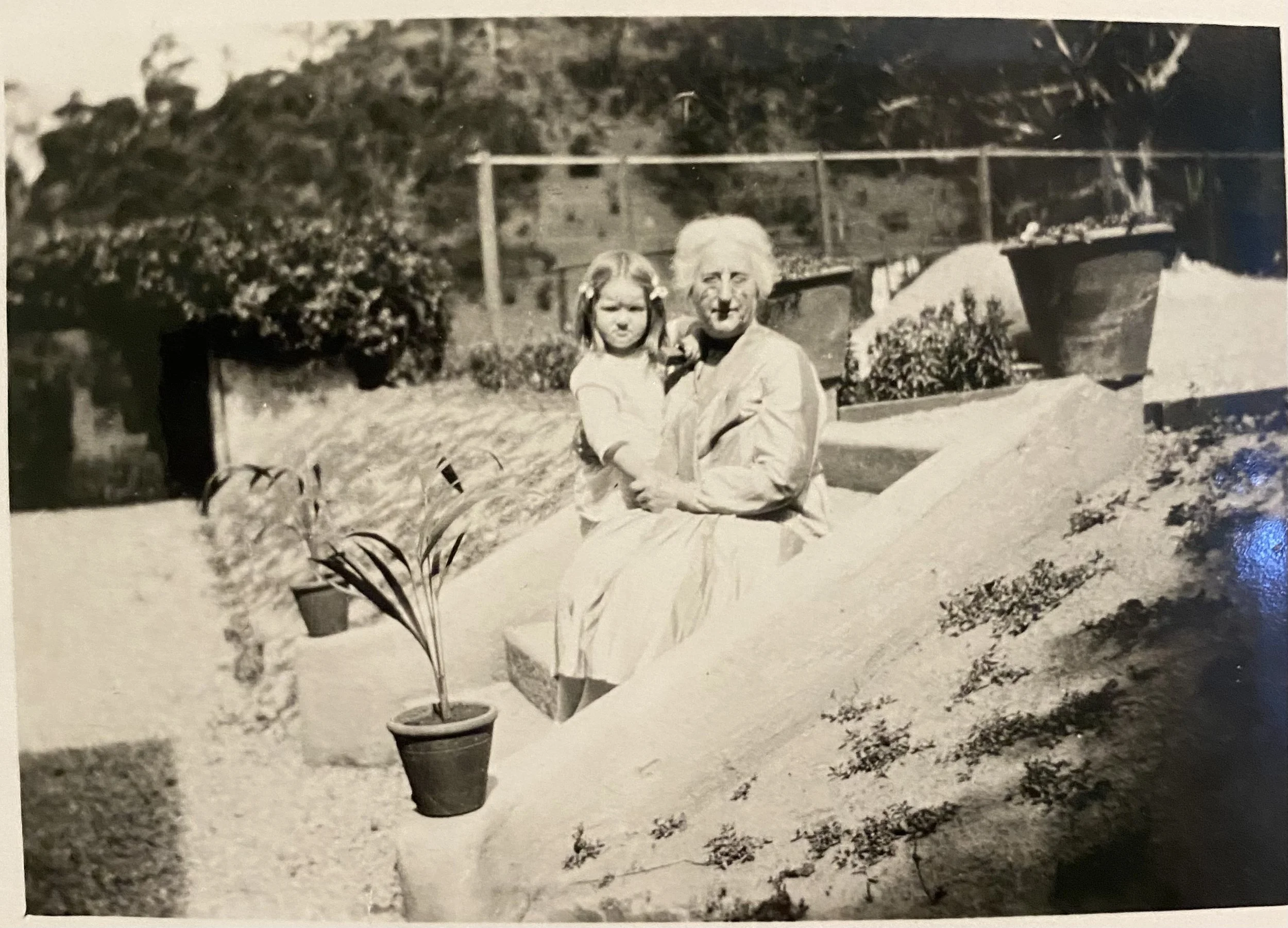
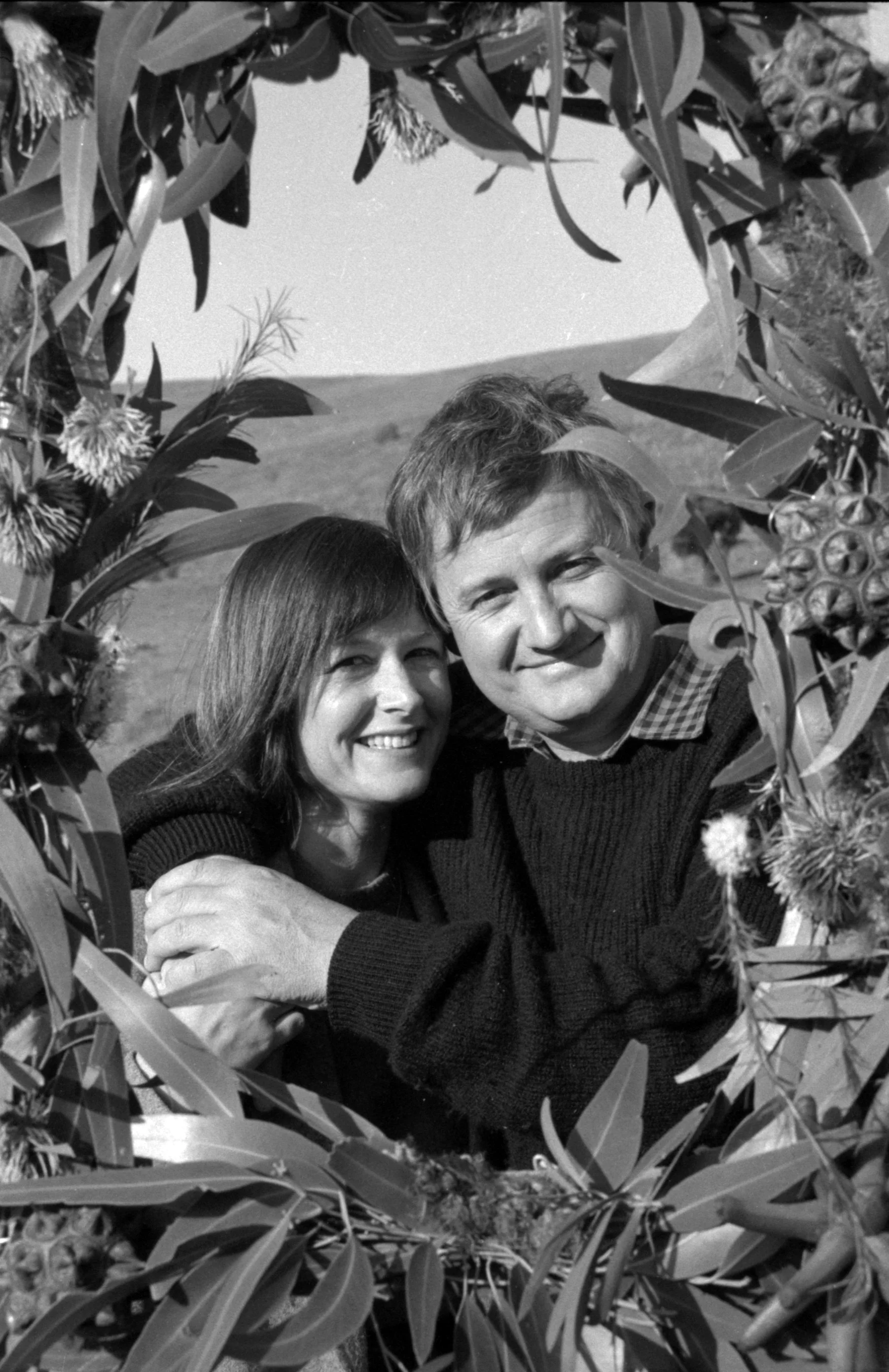
Dora Fox (married to Colonel Fox) in the Far Garden.

Dora Fox sitting on the verandah. She lived at Marybank, until she passed age 98.
1996
a new era
In 1996, the old house skipped a generation when it was passed from Dora Fox to her granddaughter Susan Penelope Lloyd, her husband Chris and their two daughters. Moving from ‘Hillside’ an adjacent property, there were some major improvements to be made.
In January 1997 the swimming pool was resurrected (having been used for some years as a tip for garden refuse), and the new pool-house was built. During the same year a vineyard of Shiraz grapes was planted in the Home Paddock, where the pigsty and vegetable garden used to be.
Although the Barn had been partly restored some years previously, the hayloft was converted for its new purpose in 1998, when ‘Marybank’ joined the Tourism Industry with the opening of the Bed & Breakfast.
A bore was sunk in the late seventies and now water is pumped to a header tank on the hill and is used for the cattle and the garden. The interesting slate troughs on the property were used for water storage before concrete and corrugated iron tanks came into use.
The current 7-acre vineyard was planted with Shiraz cuttings from Magill Estate in the late 1990s by Sue & Chris Lloyd (5th generation). The first wine was made on the property in 2000 where we picked half a ton that year. Every year a portion of our grapes is sold to Penfolds at Magill Estate, and has been known to go into St Henri, and in 2010 our grapes were selected to go into Grange. Winemaking has been on and off here at Marybank but with consistent vintages now made in 2019 and 2020 under our flagship ‘Marybank Shiraz’, with ideas to grow our brand.
All those letters, deeds and documents that tend to get lost, damaged or thrown away when you move from one house to another have survived, and give a unique record of the family’s history, their births, marriages and deaths, their trials and their tribulations, during the course of the last two centuries. It gives some indication how the family survived, despite drought, depression, family disputes and, yes, numerous periods of dire economic hardship!
2025
caretakers of heritage
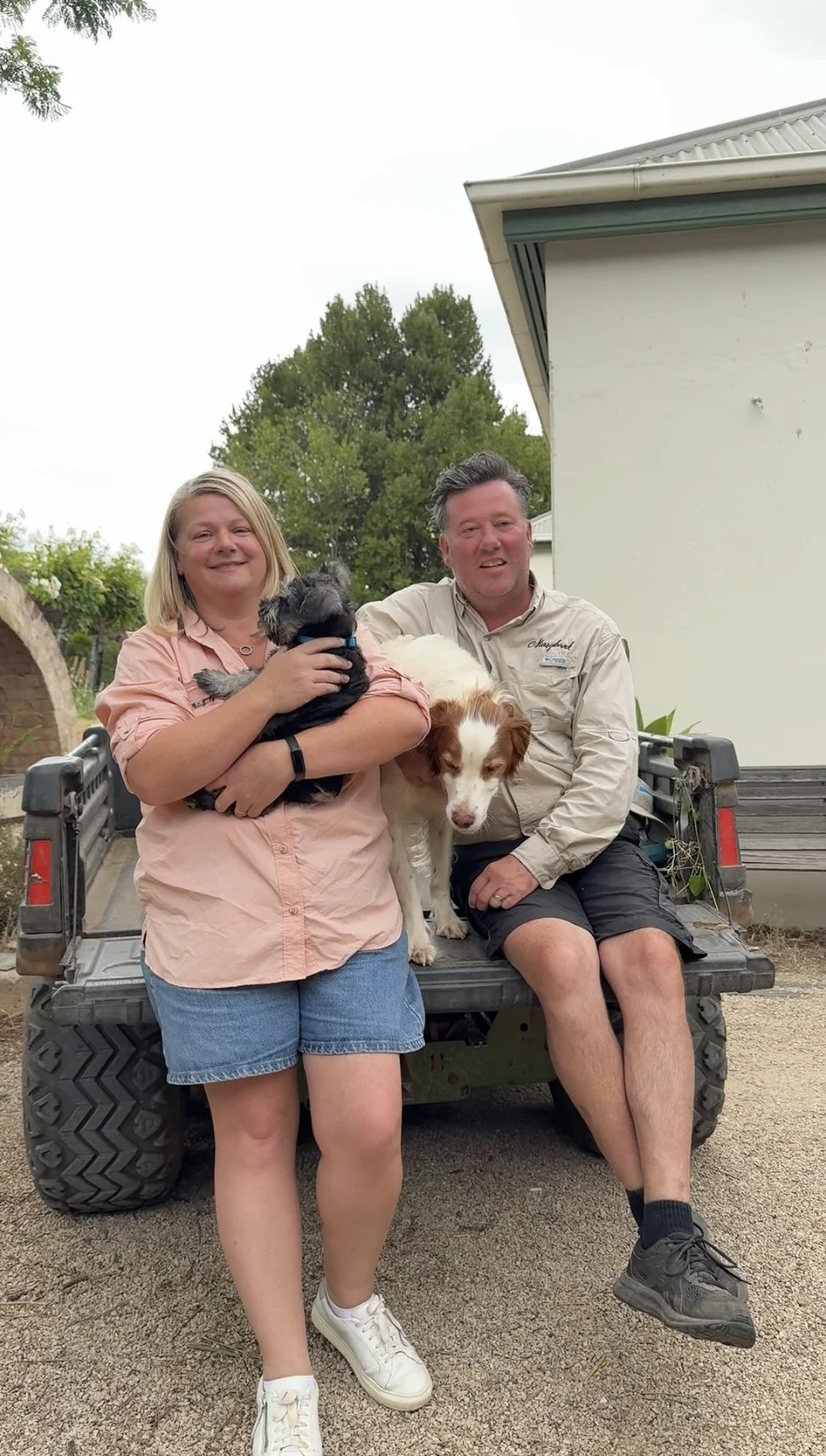
As the sixth generation, Billy and Brie are expanding the heritage rose garden, improving the soil, creating a productive kitchen garden and orchard, hosting garden experiences and growing Marybank's wine, so that every path has a purpose.
Thank you for following our journey!