The Day We Discovered Our Garden Was Rarer Than We Ever Imagined
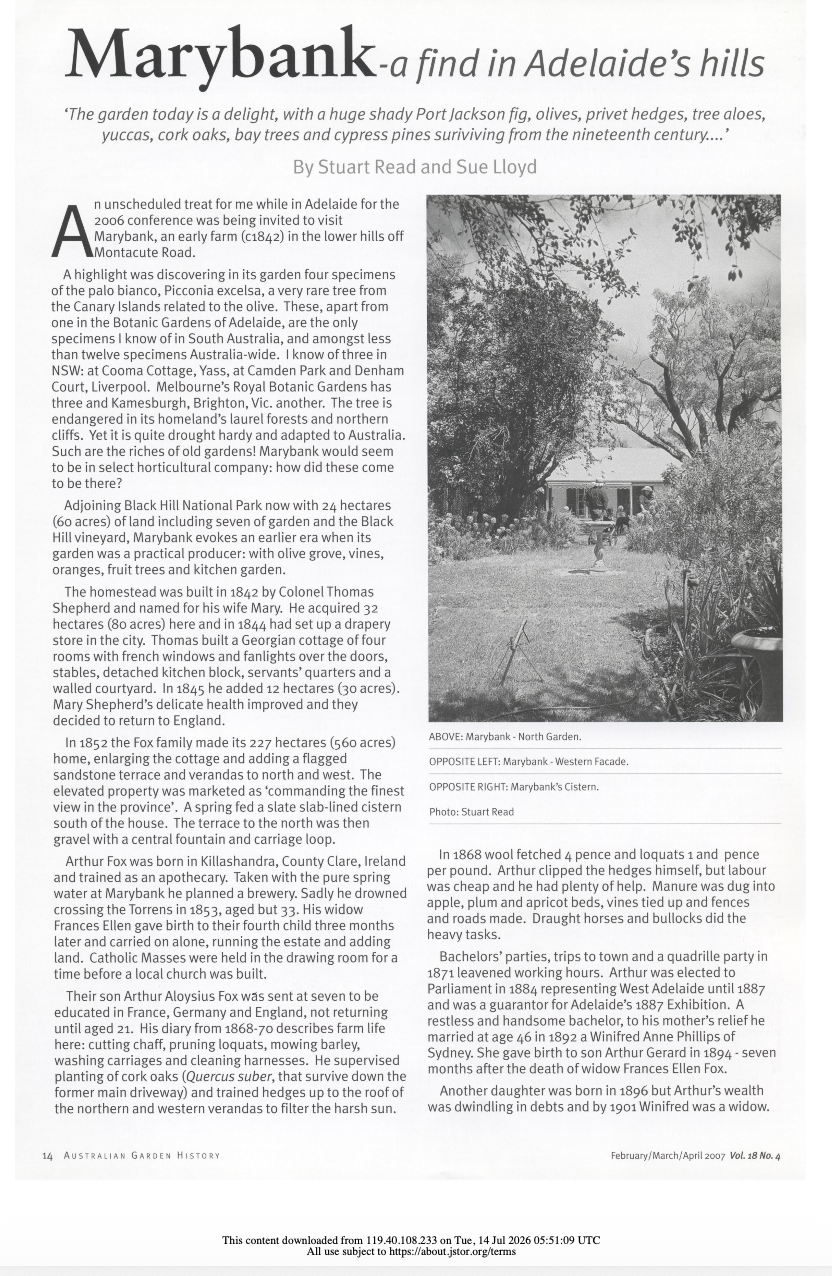
Marybank – a find in Adelaide's hills.
Every old garden holds its secrets.
Some reveal themselves slowly through faded photographs, handwritten letters or family stories. Others are hidden in plain sight, quietly growing for almost two centuries before someone with a trained eye recognises just how extraordinary they are.
For Marybank, that moment came in 2006.
Heritage horticulturist Stuart Read from the Australian Garden History Society visited our family property with my mother, Sue Lloyd, to document the history of the garden. Together they later wrote an article for the Australian Garden History journal titled "Marybank – a find in Adelaide's hills."
What they uncovered completely changed the way we looked at our landscape.
More Than Just Beautiful Trees
To our family, these trees had simply always been there.
Generations had played beneath them, walked past them every day and admired their shade without realising they were living pieces of Australia's horticultural history.
During his survey, Stuart identified two exceptionally significant species that are rarely found outside Australia's earliest colonial gardens.
The first was Picconia excelsa, sometimes known as the Canary Island olive. This remarkable tree is related to the olive and is now endangered in its native Canary Islands. While uncommon anywhere in the world, Stuart recognised that Marybank was home to several mature specimens, making the collection nationally significant.
The second was Schinus polygamus, the Chilean Pepper Tree, another species rarely encountered in Australian gardens today and one that has largely disappeared from historic landscapes.
Suddenly, what had simply been "old trees" became living survivors from another era.
A Garden Built to Last
One of the things Stuart admired most was how resilient the garden had become.
Unlike many modern gardens that rely heavily on irrigation, much of Marybank evolved during a time when water was precious. In the early days, only the orchard and kitchen garden were watered from a spring behind the barn. The ornamental gardens had to survive on little more than seasonal rainfall, selecting for hardy plants that could withstand South Australia's Mediterranean climate.
That resilience is still evident today.
Many of the original plantings continue to thrive almost 180 years later, creating a landscape that feels both natural and timeless.
Seeing Marybank Through Fresh Eyes
Reading Stuart and Sue's article today feels incredibly special.
As the sixth generation now caring for Marybank, I often find myself wandering the garden with a completely different perspective.
Every enormous tree, every winding path and every weathered hedge has witnessed generations of family life. These plants have survived droughts, changing fashions, changing owners and changing times. They're not just part of the scenery—they're part of our family's story.
The article also reminds us that gardens are never truly finished. Each generation becomes a custodian rather than an owner, adding their own chapter while respecting those that came before.
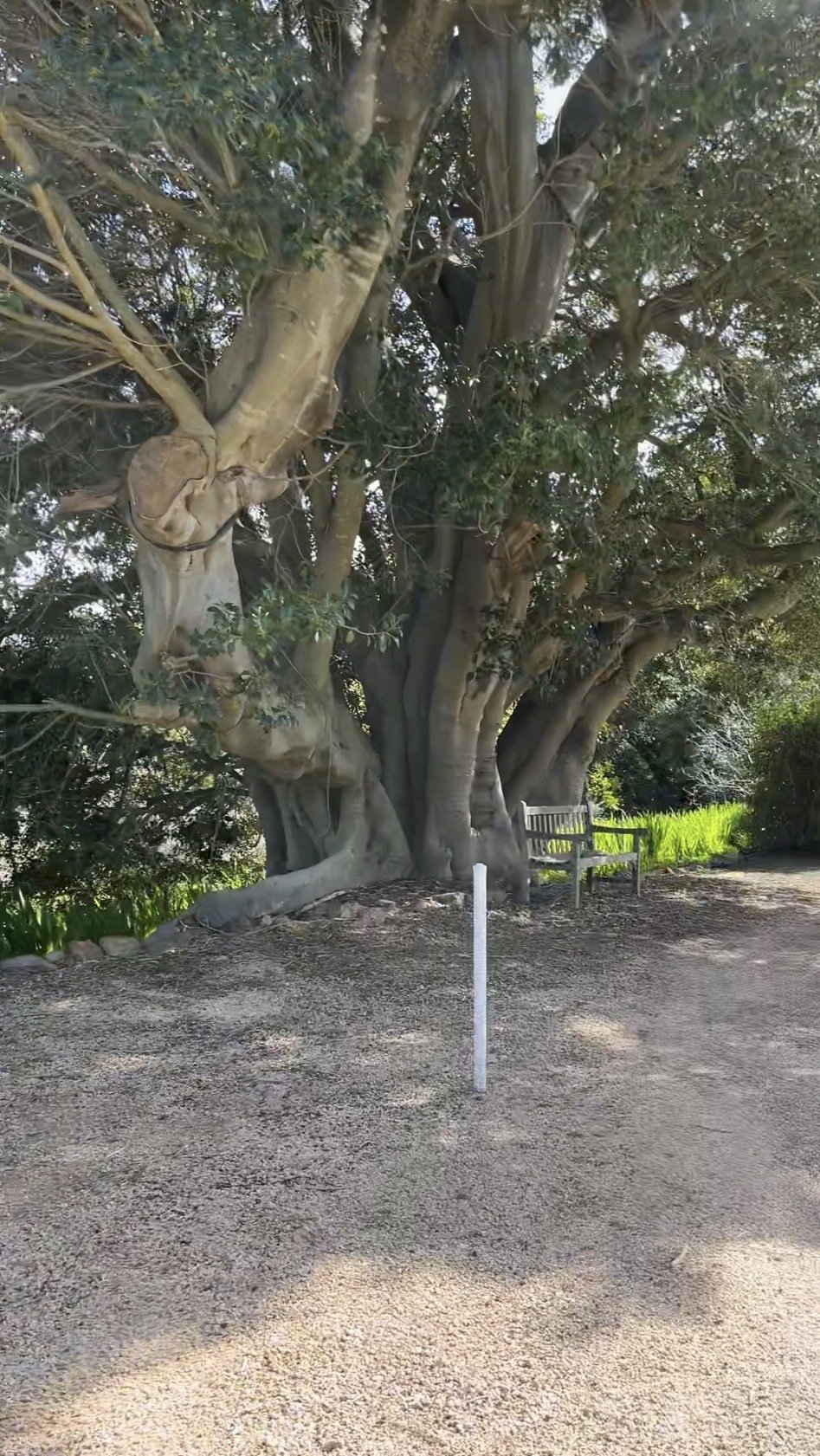
Port Jackson Fig Tree
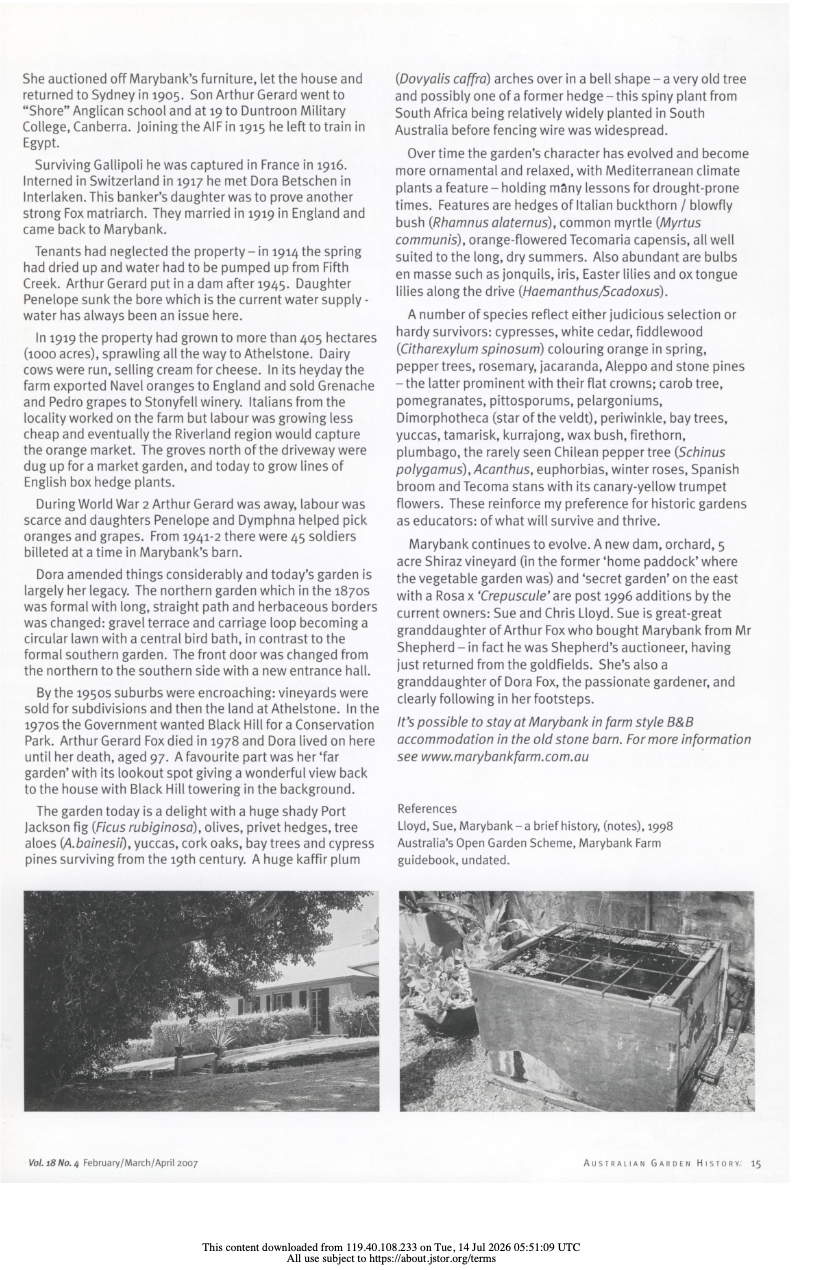
Carrying the Story Forward
Today we're continuing that tradition.
Alongside preserving these remarkable heritage trees, we're restoring old garden paths, expanding the rose garden, growing flowers for the future, planting productive orchards and sharing the gardens with visitors through weddings, accommodation and Open Garden events.
Our hope is simple: that another generation, perhaps another hundred years from now, will walk beneath these same trees and appreciate not only their beauty but the history they quietly carry.
Sometimes the rarest treasures aren't locked away in museums.
Sometimes they're growing quietly in an old family garden, waiting for someone to recognise them.